A Yard That Never Dries Out: What Saturated Ground Usually Means
A patch of yard that stays wet for days after everything else has dried is trying to tell you something.
August 25, 2026 · 3 min read
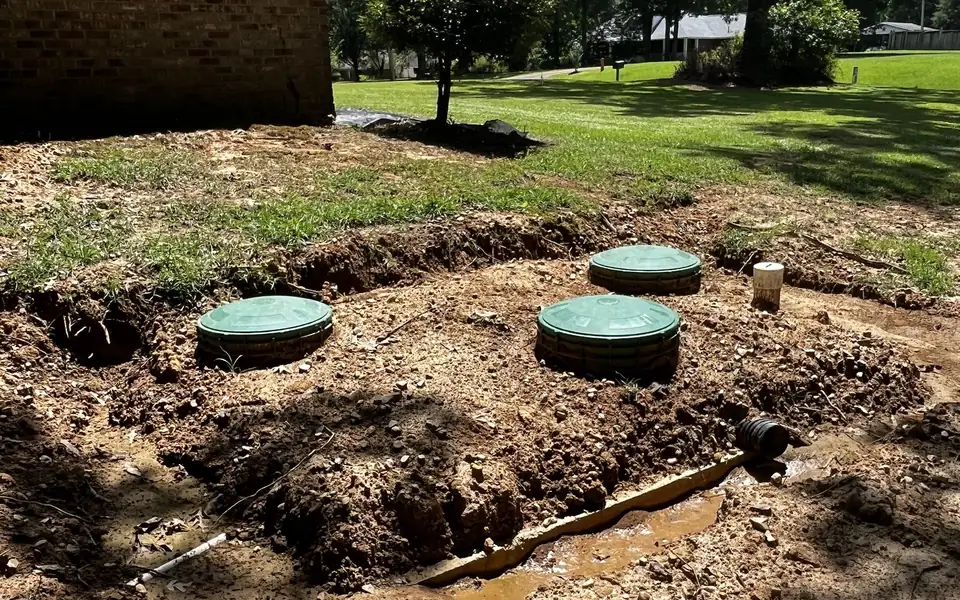
Every yard has a spot that holds water a little longer than the rest after a storm, and most of the time that's just how the land is shaped. But there's a difference between a yard that's slow to drain and a yard that never really dries out at all, one where the ground stays soft and spongy for days after the rest of the lawn is back to normal. That second kind is worth paying attention to, because it's often the septic or treatment system asking for help rather than the land itself.
It's an easy thing to write off as bad luck with the land, especially on a property with heavier clay soil, which is common enough across Rankin County that a lot of homeowners just assume their yard is naturally slow to drain. Sometimes that's exactly right. Other times the yard used to drain fine and only started staying wet more recently, which is the clue that something changed, and a system that's been working for years without issue doesn't usually start failing for no reason at all.
Natural drainage versus system drainage
Natural drainage problems tend to be consistent and tied to grading, a low spot collects runoff, a clay-heavy patch of Mississippi soil holds water longer than sandier ground nearby, and both behave the same way every time it rains. System-related saturation looks different. It tends to show up specifically over or near the drainfield or spray field, it often gets worse over time rather than staying the same year to year, and it can come with other signs, like slow drains inside the house or an odor, that a pure grading issue wouldn't have.
What a struggling system does to the ground above it
A drainfield or spray field is designed to disperse a certain volume of water into the soil at a rate the soil can absorb. When the system upstream, the tank or the treatment plant, isn't working the way it should, more water and more solids end up reaching the field than it was built to handle. The soil can't absorb it fast enough, and the surface stays wet because the water has nowhere left to go but up. It's not a coincidence when that soggy patch lines up almost exactly with where the field runs underground.
Getting the water moving again
Sometimes the fix is smaller than it looks from the surface. A spray head that's aimed wrong or partially clogged can concentrate water in one spot instead of spreading it evenly, and re-aiming or replacing a handful of heads can solve a saturation problem that looked like it needed a whole new field. Other times the tank itself needs pumping, because solids have built up enough to push more liquid out to the field than it should be handling. Either way, it usually starts with figuring out what's actually happening underground rather than just regrading the surface and hoping it holds.
What a proper fix looks like
Sorting out a genuinely saturated yard usually starts underground rather than on the surface. That means checking the tank or treatment plant first, confirming it's pumped and working the way it should, then looking at the field itself, the lines, the spray heads, whether the soil around them still absorbs water the way it did when the system was first installed. Only once that's confirmed does it make sense to think about surface fixes like grading or fill dirt, because regrading over a field that's still failing underneath just delays the same wet patch from reappearing a season later.
When it isn't the septic system at all
- Gutters or downspouts emptying directly onto or near the field
- A driveway or patio that channels rainwater toward that part of the yard
- Grading that changed after other work was done nearby, a pool, an addition, a fence line
Any of those can create a wet patch that has nothing to do with the septic system, and it's worth ruling them out before assuming the worst. But if the saturation lines up with where the field or plant sits, and it's been getting worse rather than better, that's usually the system talking. Seal Digging Service does site restoration as part of a lot of its install and repair work, regrading and bringing in fill dirt once the underlying issue is sorted, because getting the water moving again properly usually means fixing what's below before the surface can hold. A yard that's been fully sorted out this way tends to stay that way for years, rather than needing the same regrade repeated every spring.
Seal Digging Service, (601) 845-0484
Call (601) 845-0484More articles
Signs Your Septic Tank Needs Pumping Before It Backs Up
The warning signs usually show up weeks before the backup does, if you know where to look.
Why Tree Roots Find Septic Tanks, and What It Looks Like When They Have
Roots aren't attacking a tank on purpose. They're chasing water, and a septic system is full of it.