Why Tree Roots Find Septic Tanks, and What It Looks Like When They Have
Roots aren't attacking a tank on purpose. They're chasing water, and a septic system is full of it.
August 25, 2026 · 3 min read
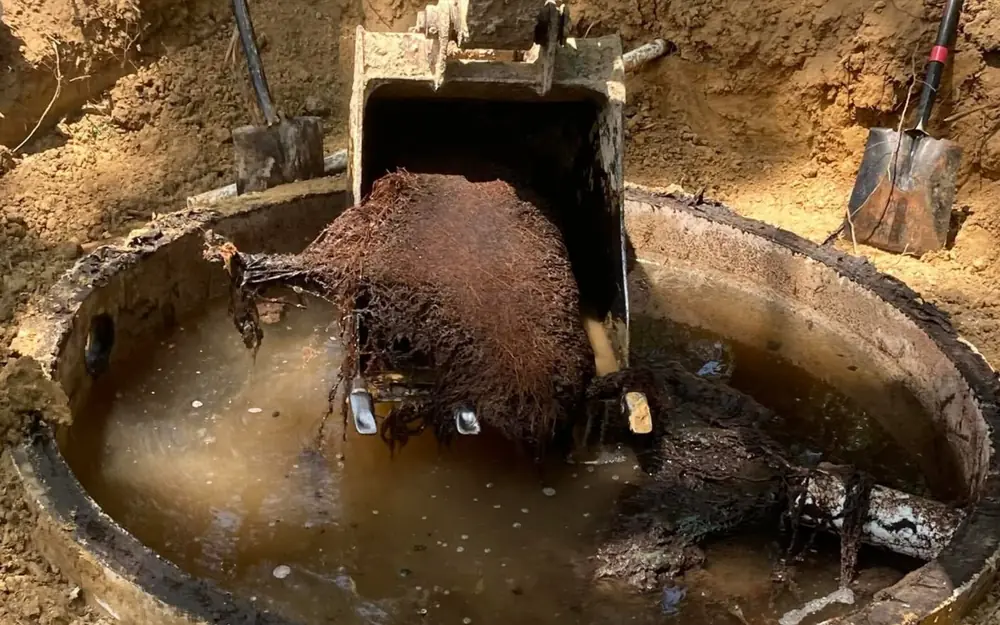
A tree doesn't know or care that there's a septic tank buried thirty feet from its trunk. What it knows is that the ground around that tank and its lines stays consistently damp, even in a dry Mississippi summer, and a root system will always grow toward the easiest source of water it can find. That's really the whole story behind root intrusion. It isn't bad luck. It's a tree doing exactly what tree roots do, in exactly the spot where doing it causes the most damage.
Roots follow water, not intent
A septic tank and its outlet lines sit in ground that's wetter than the soil around it, because that's the point, the system is moving water through the ground on purpose. Roots are opportunistic. Fine feeder roots spread out searching for moisture, and once they find a steady source, the tree commits more growth toward it. A tank or line that's been in the ground for years without a problem can still end up compromised once a nearby tree matures enough for its root system to finally reach that depth.
Where a root actually gets in
Roots don't punch through solid concrete or intact pipe. They get in through what's already there, a hairline crack in an older tank, a loose joint between pipe sections, a lid seal that's degraded over decades. A root finds the smallest gap, works a fine tendril through it toward the moisture and nutrients inside, and once it's in, it keeps growing. What started as a single thread can become a dense mass over a few seasons, especially with a fast-growing species close by.
What it looks like from the surface, long before you can see the root
- Drains that slow down gradually over weeks rather than clogging all at once
- Gurgling or slow draining that seems to track with how much the household is using the system that week
- A section of lawn over the line or tank that's oddly lush compared to the rest of the yard
- Backups that come and go rather than staying constant, as the root mass shifts with water flow
What it looks like once the ground opens up
When a tank does get opened for a look, root intrusion is unmistakable. It isn't a stray tendril, it's a dense, tangled mass filling whatever space it's had years to grow into, sometimes thick enough that clearing it takes a tracked excavator bucket rather than hand tools. Seal Digging Service has pulled root masses like that out of tanks across Rankin County, and the extracted balls of root left sitting on a lawn afterward are usually bigger than most homeowners expect from a problem that started as a slightly slow drain.
Preventing it before it starts
The most reliable prevention is distance, keeping thirsty, fast-growing trees well clear of the tank and the field when a yard is first planted or landscaped. That's easier to plan for on a new install than to retrofit around a tank that's already surrounded by mature trees, but even then, knowing where the lines run before adding new landscaping helps avoid planting a future problem directly on top of them. A property that's had a recent line inspection also has a clearer picture of exactly where those lines sit, which makes future landscaping decisions a lot less like guesswork.
Which trees cause the most trouble
Species with aggressive, water-seeking root systems are the usual culprits. Willows are the classic example because they're practically built to find moisture, but silver maples, sweetgums, and river birches can all do the same thing if they're planted close enough to a tank or line. It isn't only about distance either. A tree planted decades ago at a reasonable distance can still reach a line once its root system has had enough time to spread.
Catching it before it's a bigger job
Gradual slowdowns and a lawn patch that won't quite match the rest of the yard are worth a call before they turn into a full backup. Line inspection can usually confirm whether roots are the cause without opening anything up, and clearing an early intrusion is a smaller job than excavating a line that's been fully blocked for months. A tank that's been serviced regularly is also just easier to keep an eye on, since a clean tank makes it obvious faster when something new, like a root, starts showing up where it shouldn't.
Seal Digging Service, (601) 845-0484
Call (601) 845-0484More articles
Signs Your Septic Tank Needs Pumping Before It Backs Up
The warning signs usually show up weeks before the backup does, if you know where to look.
Living With an Aerobic Treatment Plant: What the Alarm and the Spray Heads Are Telling You
An aerobic system does more work than a standard septic tank, and it talks to you when something's off.