Signs Your Septic Tank Needs Pumping Before It Backs Up
The warning signs usually show up weeks before the backup does, if you know where to look.
August 25, 2026 · 3 min read
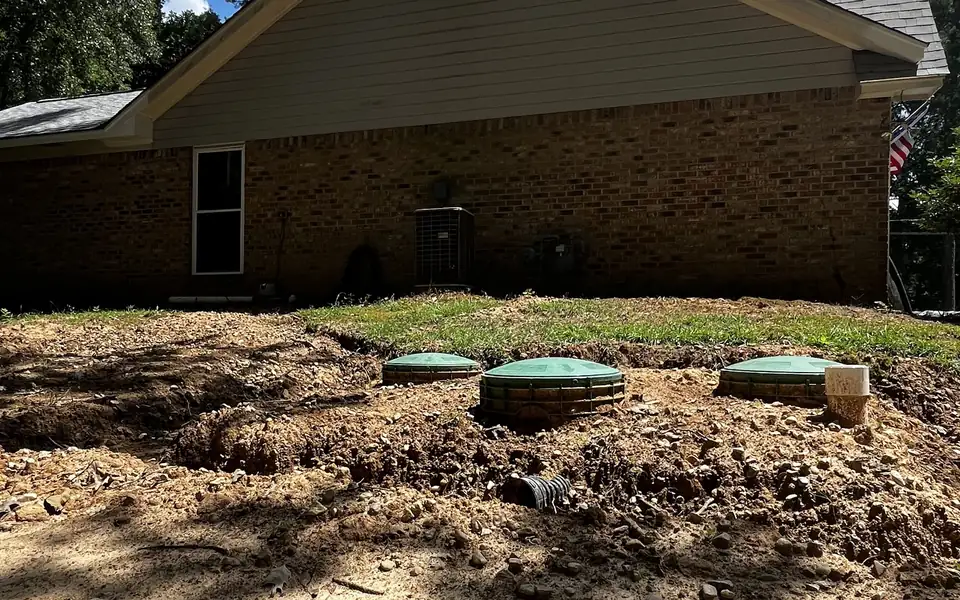
A septic tank does not fail all at once. It fills slowly, over months or years depending on the household, and by the time water is standing in the yard or backing up into a tub, the system has usually been trying to tell you something for a while. Most of the emergency pump-out calls Seal Digging Service gets could have been scheduled visits if the early signs had been caught sooner.
What full actually means
A septic tank isn't a container that fills and empties like a bathtub. Solids settle to the bottom as sludge, grease and lighter waste float to the top as scum, and the liquid layer in between drains out to the drainfield once it's clear enough. The tank does its job as long as there's room in that middle layer for wastewater to separate before it leaves. Once sludge and scum crowd out that space, solids start washing toward the drainfield lines, and that's a far more expensive problem than the tank itself ever was.
Slow drains are usually the first hint
If every drain in the house is running slow at the same time, and it isn't one clogged sink, that's rarely a plumbing problem on its own. It's more often the tank telling you it can't take on new wastewater fast enough. A single slow drain is probably a local clog somewhere in that fixture's own line. Several slow drains together, especially the lowest fixtures in the house, like a basement floor drain or a ground-floor shower, point back to the tank rather than the pipe.
Sounds and smells worth paying attention to
Gurgling from a toilet right after a sink drains, or air bubbling up through standing water in a tub, means air is getting trapped somewhere it shouldn't be, which often means the tank or the line running to it is backing up. A sulfur or sewage smell near the tank lid or the yard above the drainfield, especially after rain, is another one worth acting on rather than waiting out.
What the yard is showing you
- A patch of grass over the tank or drainfield that's noticeably greener and grows faster than the rest of the lawn
- Standing water or a soft, spongy patch that doesn't dry out between rains
- Grass dying back in a straight line, following where the drainfield or spray lines run underground
Any one of those on its own can have another explanation, a low spot, a leaky hose bib, a bad summer for the lawn. All three together, especially after a stretch of dry weather that should have dried the rest of the yard out, usually means the tank or the field is carrying more than it can handle right now.
What a pump-out actually involves
The process itself is simpler than most homeowners expect. A vacuum truck parks as close to the access lid as it can get, the lids come off, and a hose draws out the sludge, scum and liquid layers until the tank is empty. A good technician doesn't just empty it and leave, they'll look at the baffles, check for cracks or settling in the lid and walls, and note anything that looks like it's heading toward a bigger problem, root intrusion, a failing baffle, a lid that's no longer sealing properly. That inspection is worth as much as the pumping itself, because it's often the only time anyone gets eyes on the tank between one visit and the next.
There's no single number that fits every home
Household size, tank size, and how much actually goes down the drain all change how fast a tank fills, so there's no one interval that's right for everyone. What holds true is that a tank that's never been pumped is a tank that's overdue, and a household noticing any of the signs above is better off getting it checked than guessing. Catching it at the slow-drain stage instead of the backed-up-toilet stage is usually the difference between a routine call and a genuinely bad afternoon. A garbage disposal that runs constantly, laundry spread across several loads a day, or a full house of guests for a week can all push a borderline tank over the edge faster than usual, which is worth keeping in mind around holidays and family visits.
Seal Digging Service, (601) 845-0484
Call (601) 845-0484More articles
Why Tree Roots Find Septic Tanks, and What It Looks Like When They Have
Roots aren't attacking a tank on purpose. They're chasing water, and a septic system is full of it.
Living With an Aerobic Treatment Plant: What the Alarm and the Spray Heads Are Telling You
An aerobic system does more work than a standard septic tank, and it talks to you when something's off.