Pump
Septic Tank Pumping in Florence, MS
Routine pump-outs and the overdue kind, on our own vacuum trucks, out of the yard on US 49. Tell us roughly how many people are on the system and we'll tell you whether you're due or just worrying.
What actually happens once the lids come off
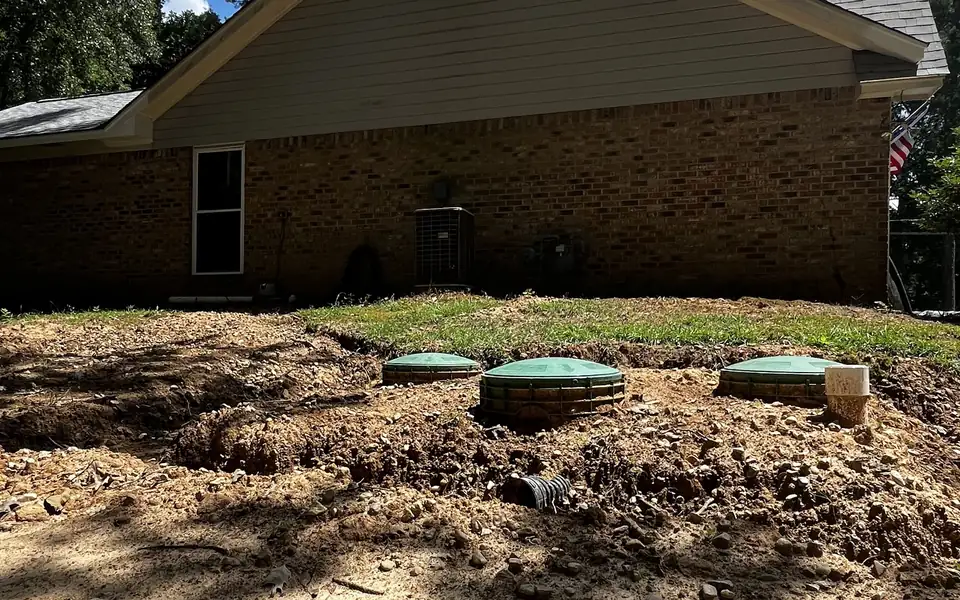
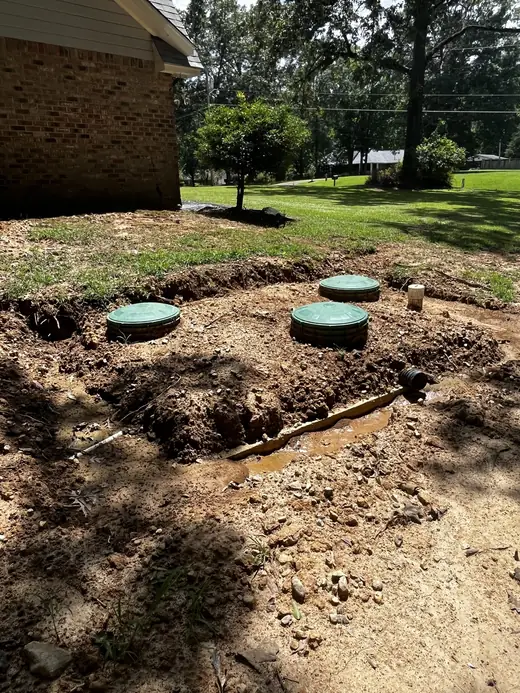
A septic tank works in layers. Solids settle to the bottom, clearer liquid sits in the middle and works its way out to the drain field, and a crust of scum floats on top. Left alone long enough, that bottom layer builds up until there isn't enough room left for the tank to do its job, and that's when a house starts backing up or a yard starts staying wet. A pump-out starts at the risers, the green lids you can see set flush at grade if a system's been done properly. Once they're off, the truck's hose goes to the bottom first, working the solid layer loose and drawing it out along with the liquid and the scum crust above it, rather than skimming the top and calling it done. While the tank's open we look at the baffles and outlet tee, because a cracked or missing baffle is often the real reason a tank filled up faster than it should have.
How often it's actually due
There's no single number that fits every house. Tank size, how many people are on the system day to day, and what's going down the drains all move it. As a rough guide, most households land somewhere in the three to five year range, but a house with a smaller tank and more people in it can need it sooner, and a couple in a bigger tank can go longer. If you can't remember the last time it was done, that's usually your answer. Slow drains, gurgling toilets, or a wet patch over the tank or field are the system telling you sooner than that.
Seal Digging, Authorized Consolidated Treatment Systems dealer. Call (601) 845-0484.
On the truck
Three things happen at every pump-out.
01
Find the risers
On a system we've worked before, that's a few minutes. On one we haven't, it can mean probing the yard first. Either way, nothing gets pumped until the lids are open and we can see what's actually in there.
02
Pump bottom first
The hose works the settled solids loose before drawing off the liquid and the scum crust above it. A truck that only takes the top layer leaves the actual problem sitting in the tank.
03
Check the baffles
A cracked or missing outlet baffle lets solids drift into the drain field, which is a much bigger job than a tank that just needs pumping. We look while it's open, not after something's already failed.
In their words
4.2 stars, 24 Google reviews.
Same trucks, same crews, whether it's a routine pump-out or a system that's telling you something's wrong.
“My sprinklers were clogged and passing brown water, alarm was going off and toilets were going slow. I called them up and by pure luck they had installed this system and were able to help me understand how it works and how to care for it. Excellent service and fair pricing. The technician inspected and cleared my lines, replaced a sprinkler head, and cleaned out the tanks. The bill was very reasonable considering the hours he was on site.”
“Great company. We have used them for Pump outs, installations on a new build, and more.”
While you're here
Pumping keeps a system going. Sometimes it needs more than that.
If a pump-out turns up a cracked baffle, a failing tank, or a system that's simply past what pumping can fix, we handle that too. Our septic system installation page covers what a replacement or new-build install actually involves. For everything else we install, pump and service, from grease traps to lift stations, see the full services list. We're an authorized dealer and service provider for Consolidated Treatment Systems, so if you have a Multi-Flo, Nayadic or Sybr-AER unit, you're talking to people who install and maintain that line rather than someone meeting it for the first time.