Repair
Septic and Treatment System Repairs
Clogged spray heads, alarms that will not stop, slow drains and yards that stay wet. Most of these calls trace back to something specific once someone actually opens the system up.
Reading what the yard and the alarm are telling you
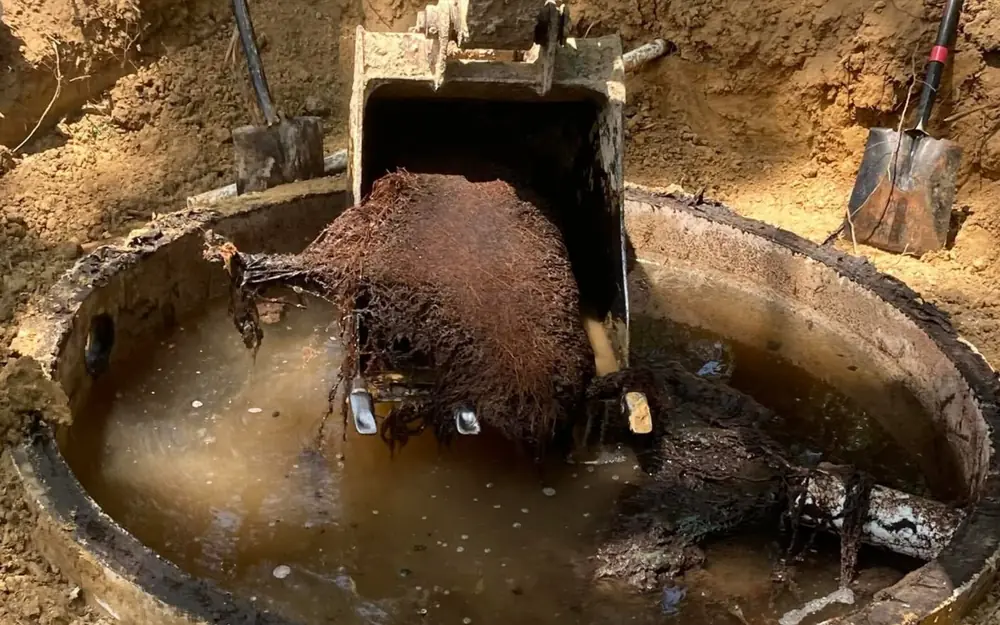
Root intrusion is one of the most common causes behind a repair call that starts out looking like something else. Roots find a tank or a line long before a homeowner notices anything, working into joints and cracks over a season or more, and by the time the yard is wet or the toilets are slow the damage has usually been building for a while. A clogged spray head reads the same way from the surface, cloudy or brown water instead of a clean mist, but the cause is different: sediment or buildup blocking the head itself rather than roots in a line. Pump and alarm faults are the third common thread, and they are usually the earliest warning of the three, sounding before the yard shows any sign of trouble at all. Seal Digging runs its own vacuum trucks and a tracked excavator, so a line that needs clearing or a tank that needs opening up does not wait on hired equipment.
What we actually do when we get there
On one call, sprinklers were clogged and passing brown water, the alarm kept sounding and the toilets were running slow. It turned out to be a system Seal Digging had installed years before, so untangling it started with already knowing how that plant was built. The lines got inspected and cleared, a spray head replaced, and the tanks cleaned out, with a walk-through afterward on how to keep it from happening again. That is the shape most repair calls take: look, clear or replace whatever failed, and leave the owner knowing what to watch for next time.
One yard stayed saturated for two years from a faulty sprinkler system on a treatment plant before three new spray heads let the effluent disperse properly again. Call Seal Digging on the same problem: (601) 845-0484.
Signs it is not a one-off
Four things worth calling about early.
Sprinklers
Brown or cloudy water at the spray heads
Clean effluent from a working treatment field runs clear. Brown or cloudy spray almost always means a clogged or failing spray head, or a line that needs clearing before the head itself is even the problem.
Alarm
An alarm that will not stop
The alarm on a treatment plant is watching the aerator, the pump or the water level, not decoration. A sounding alarm is the system telling you something is wrong before the yard shows it.
Inside
Toilets and drains running slow
Slow drains inside the house often trace back to a saturated drainfield outside it. If the ground cannot take any more water, the house has nowhere to send it either.
Outside
A patch of yard that never dries out
A saturated corner of lawn is usually the field telling you effluent is not dispersing properly, whether from a failed spray head, a clogged line or a pump that has stopped keeping up.
What roots actually do underground
By the time you can see it, the roots have been working for a season.
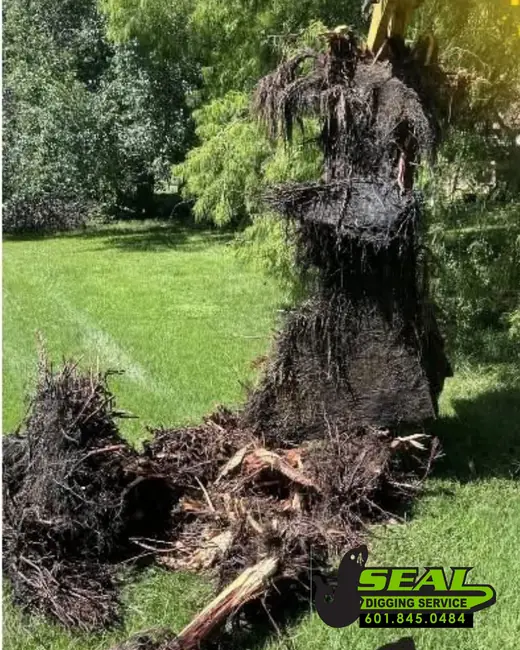
Tree and shrub roots follow moisture, and a septic tank or line is a steady source of it. Once roots find a joint or a hairline crack they widen it over time, blocking flow and eventually cracking the tank wall outright. Clearing it properly means opening the ground and pulling the mass out, not just cutting what is visible at the surface, which is exactly what our tracked excavator and crew are set up to do on-site. Sometimes what surfaces after that is a tank old enough that a treatment system, not another patch, is the better long-term fix.
Not sure what you are looking at yet?
Tell us what the yard, the alarm or the drains are doing and we can usually tell you what it means before anyone drives out.
4022 US 49, Florence, MS 39073/Monday to Friday: 8:00 AM to 4:00 PM/Also see treatment systems and contact us.