Why Your Sprinkler Heads Keep Clogging and What You Can Do About It
A clogged spray head is not just annoying, it means your treatment plant is not dispersing effluent the way it was designed to.
August 20, 2026 · 3 min read
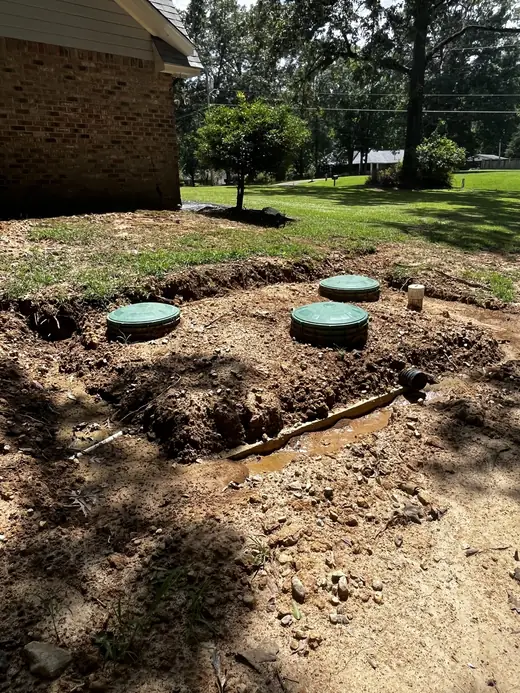
If you have an aerobic wastewater treatment system and your spray heads keep clogging, you are not imagining it. This is one of the most frequent maintenance calls for treatment plant owners in Mississippi, and the reasons it keeps happening are the same across most residential systems. Understanding what causes it makes it easier to know when to call and when to wait.
What the Spray Heads Are Actually Doing
Aerobic treatment systems do not send effluent to a buried leach field the way a conventional septic tank does. Instead, the treated water is pumped to spray heads distributed around the yard, where it disperses over the grass or ground cover. The heads themselves look similar to lawn irrigation sprinklers and work on the same basic principle. Because they are processing treated wastewater rather than clean tap water, the conditions that cause clogging are more consistent and more aggressive than what a standard irrigation system faces.
Mineral Deposits and Biofilm
Even treated effluent carries dissolved minerals and trace biological material. Over time, mineral deposits build up inside the head and around the nozzle opening, narrowing the flow path. Biofilm, a thin layer of biological growth, forms on interior surfaces for the same reason it forms on the inside of any pipe that carries nutrient-containing water. The nozzle opening is small by design, which means it does not take much buildup before flow drops noticeably. A head that is running at reduced flow is already partly blocked before it shows any visible exterior sign.
What Brown or Off-Color Water Indicates
Tom Oliver, who left a review of Seal Digging Service six years ago, describes finding his sprinklers passing brown water while his alarm was going off and his toilets were running slow. Those three things together pointed to the treatment plant itself, not just the heads. Brown or discolored water from the spray heads usually means the clarification stage of the treatment process is not working correctly. The heads may also be clogged, but the discoloration is a system-level signal that warrants a full inspection rather than just a head cleaning.
Lawn Equipment Is a Bigger Factor Than Most Owners Realize
Amanda Woods, another Seal Digging customer, had three new spray heads installed after her faulty system saturated her backyard. After her daughter ran over one of the heads with a lawn mower, she called back and had it replaced the same day. Mower impact is one of the leading causes of spray head damage and displacement. A head that has been struck may look intact but sit at the wrong angle, which causes the dispersal pattern to concentrate in one spot rather than spread evenly. Uneven dispersal leads to one part of the yard staying saturated while the system alarm stays quiet.
What a Proper Sprinkler Inspection Covers
- Checking each head's flow rate and spray pattern against what the system spec calls for
- Flushing or clearing nozzles that are partially blocked
- Replacing heads that are cracked, damaged, or have failed seals
- Inspecting the supply lines to each head for buildup that reduces pressure
- Confirming the pump timer cycles are distributing load evenly across zones
- Checking the area around each head for standing water or soil saturation that suggests a zone is overloaded
When to Call vs. When to Wait
A single head running at lower pressure than its neighbors is worth monitoring for a week before calling, especially if it was just cleaned. A head that has stopped spraying entirely, any alarm condition on the treatment unit, brown or discolored water from any head, or a saturated area of yard that was not saturated before are all reasons to call the same day rather than wait. The system is designed with a small margin for reduced performance; it is not designed to run indefinitely with blocked dispersal.
Seal Digging Service, Florence, Mississippi
Seal Digging Service has been repairing and replacing spray heads, clearing clogged lines, and servicing aerobic treatment plants throughout the Florence area for over six years. If your heads are clogging repeatedly or you are seeing any alarm condition on your system, call (601) 845-0484. The consultation is free.
Seal Digging Service · (601) 845-0484
Call (601) 845-0484More articles
Signs Your Septic Tank Needs Pumping Before It Becomes an Emergency
Your system will tell you it's full before it overflows, if you know what to look for.
Metal Septic Tank vs Modern Treatment System: What Florence Homeowners Should Know
A metal tank buried in the 1970s or 1980s may look fine from the lid. What is happening inside is a different story.