Does Homeowner's Insurance Cover Septic System Damage? (What One Customer Learned)
Before you pay for a septic repair or replacement out of pocket, there is one call most homeowners forget to make.
August 20, 2026 · 3 min read
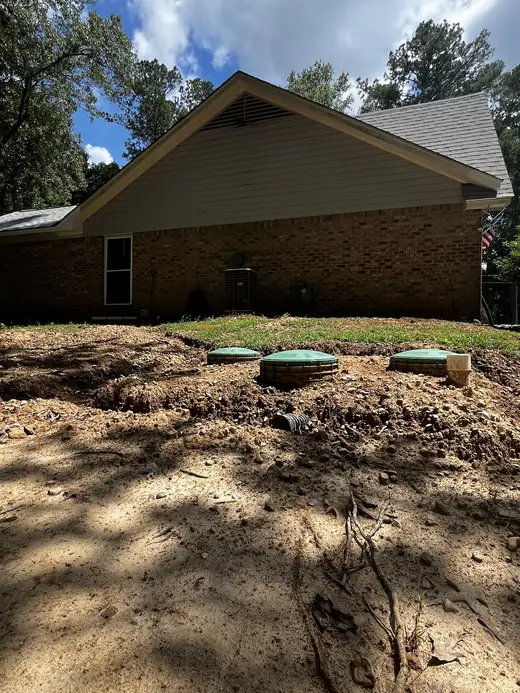
Most homeowners assume septic system problems are not covered by their homeowner's insurance. That assumption costs money. Whether coverage applies depends on the cause of the damage, the specific policy language, and what the insurer is told when the claim is filed. One Seal Digging customer in the Florence area found this out after a storm damage call that could have gone very differently.
What Happened to June Wilson
June Wilson describes the situation in her Google review. A large tree limb came down during a thunderstorm and destroyed the lid on her family's forty-year-old metal septic tank. As seniors on a fixed income without access to public sewer service, they were facing a cost she estimated at around six thousand dollars for a replacement wastewater treatment system. A Seal Digging employee suggested she check with her homeowner's insurance carrier before paying out of pocket. She did, and the insurer paid for the installation and the landscaping, including fill dirt. That single piece of advice changed the outcome of the job.
Why Sudden and Accidental Damage Is Treated Differently
Standard homeowner's policies are generally written to cover sudden and accidental losses. A tree limb damaging a structure, including a septic lid or tank, is the kind of event policies were written around. The key distinction most adjusters apply is between sudden damage and gradual deterioration. A metal tank that corrodes over thirty years and eventually fails from inside-out rust is unlikely to be covered under a standard policy. A metal tank lid that is crushed by a falling object in a storm is a different type of claim.
What Policies Actually Say About Septic Systems
Policy language varies by carrier and by state. Mississippi's Insurance Department oversees minimum coverage requirements for homeowner's policies issued in the state, and their published guidance is the right place to start if you want to understand what is and is not required. What your specific policy covers is a question for your own insurer, not a general rule. Some policies explicitly exclude underground systems. Others cover them under the structure section of the dwelling coverage. Some policies include a service line endorsement that may extend coverage to buried system components.
What to Tell Your Insurer When You Call
The cause of the damage matters more than the cost of the repair when you are describing the situation to your insurer. Be specific about what happened and when. If a storm is involved, the date and the weather event matter. If there is a visible external cause like a falling object or vehicle impact, document it with photos before any excavation or cleanup begins. An adjuster will almost always ask for documentation of the cause, and photos taken before the site is disturbed carry more weight than ones taken after. Let your insurer open the claim before you authorize repair work if at all possible, so they can inspect the damage on their own terms.
What Is Almost Never Covered
Wear and corrosion over time, gradual soil movement, root intrusion over years, and age-related tank failure are excluded from most policies as maintenance issues rather than insured events. A tank that failed because it was never pumped is not a sudden loss. A drain field that collapsed because it was overloaded for a decade is not a sudden loss. These are real scenarios that lead homeowners to call their insurer and receive a denial, which is a frustrating outcome that could have been anticipated. Insurance is most useful on septic systems when something external and sudden causes the damage.
The Line Item for Landscaping
In June Wilson's case, the insurer also paid for landscaping and fill dirt, not just the system itself. This is worth noting because excavation for a septic installation leaves the yard in rough shape, and the cost of restoring the ground surface after a dig is a line item that homeowners sometimes absorb without realizing it might be part of a covered loss. When documenting a claim, include everything that the repair requires, not just the parts and labor for the tank itself.
Seal Digging Service, Florence, Mississippi
Seal Digging Service has served the Florence, Mississippi area for over six years. If you are facing a septic repair or replacement and have not yet called your insurer, that call is worth making before you authorize anything. For a free consultation, reach the team at (601) 845-0484.
Seal Digging Service · (601) 845-0484
Call (601) 845-0484More articles
Signs Your Septic Tank Needs Pumping Before It Becomes an Emergency
Your system will tell you it's full before it overflows, if you know what to look for.
Metal Septic Tank vs Modern Treatment System: What Florence Homeowners Should Know
A metal tank buried in the 1970s or 1980s may look fine from the lid. What is happening inside is a different story.